IPv6 & Home Router Ban (in the US)
|
by Craig Miller
It has been in the news recently, that due to security concerns, the FCC will no longer approve routers not made in the USA. What does this mean practically, and how will it affect IPv6 adoption?
Improving Security?
The concern the US Government has over foreign-made home routers is that other countries (most notable, China) makes not only the hardware, but also the software that runs these routers. And that they may have put in back-doors, allowing these foreign governments to spy on Americans.
Not an unreasonable concern, since the US Government already spies on Americans, as Ed Snowden pointed out 10 years ago. So is this really an issue of spying, or who is doing the spying?
Intereestingly enough, the FCC order grants conditional exemptions for the US Department of Defense (DoD), and the Department of Homeland Security (DHS)
By banning new routers from FCC approval (and thereby for sale), US consumers will be left with older routers, and firmware that isn't being updated. This doesn't sound like improving security.
Alternatives? OpenWrt
Of course, there is an open source alternative for over 2200 older routers, called OpenWrt. The software gets regular updates (the most recent was released just last month). And it has an excellent IPv6 support, including rational firewall rules for IPv6, by default.
Installing OpenWrt isn't for everyone. With some routers, there's a real chance of bricking your router, but those are the minority. If you feel your technical skills aren't up to the task, ask a geek friend to give you a hand.
Exemptions to the FCC Ban
Interestingly enough, the FCC has granted an exemption to Netgear on 14 April 2026, even though, Netgear since their inception in 1996 has made their equipment in China.
Interestingly enough, I was working at Bay Networks, when they started a consumer-grade product line called Netgear.
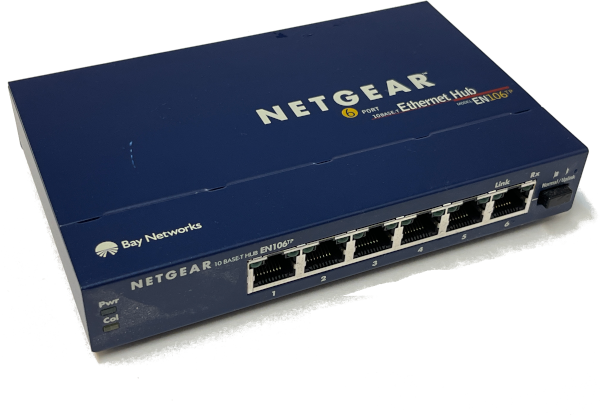
The only non-foreign-made home router (e.g. made in the US) is Starlink's router, made in Texas.
IPv6 Adoption
How does all of this impact IPv6? Specifically IPv6 Adoption?
On 28 March 2026, Google IPv6 Stats showed that Google's in-bound traffic crossed the 50% line reaching 50.1%, and again on 18 April 2026.
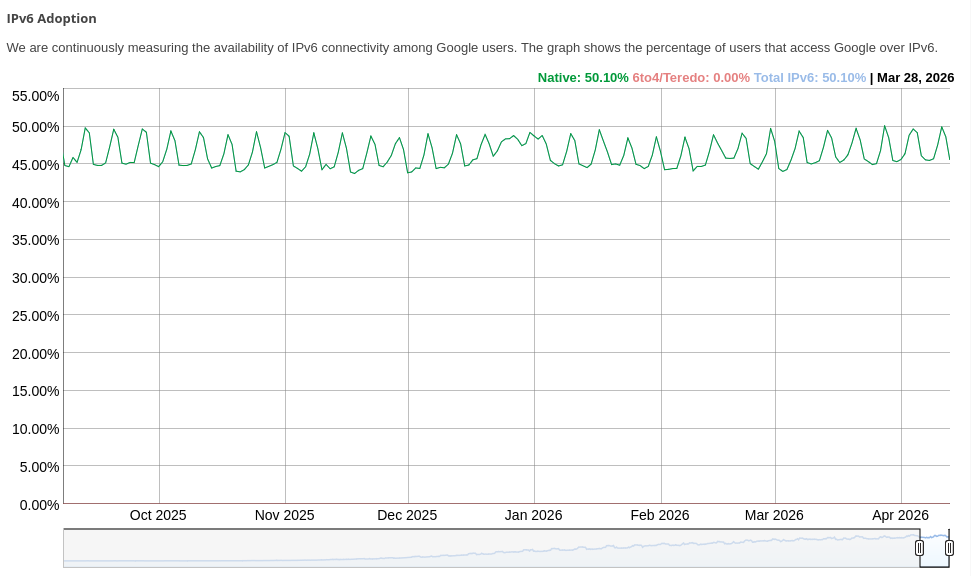
The major ISPs in the US have already rolled out IPv6. It is only the older home routers, which if they IPv6 support , have it disabled by default, and therefore holding back increased IPv6 utilization. With the FCC ban on new foreign-made home routers, the growth of IPv6 utilization in the US will be slower.
Not only will Americans be less secure, but their opportunity to use the IPv6 "fast lane" will be curtailed. Perhaps more "exemptions" are on the way.
Notes:
- No Routers graphic by AI, deepai.org
- FCC Ruling based on the Secure Networks Act
- The IPv6 "Fast Lane" is a true end-to-end connection, without any layers of NAT (think: traffic lights) to traversed
- FBI hacks home routers to make them safe from the GRU (Russian Intelligence Directorate)
- FCC allows router updates until 1 Jan 2029 (published 8 May 2026)
22 April 2026
Updated: 12 May 2026 (with most recent FCC notice)